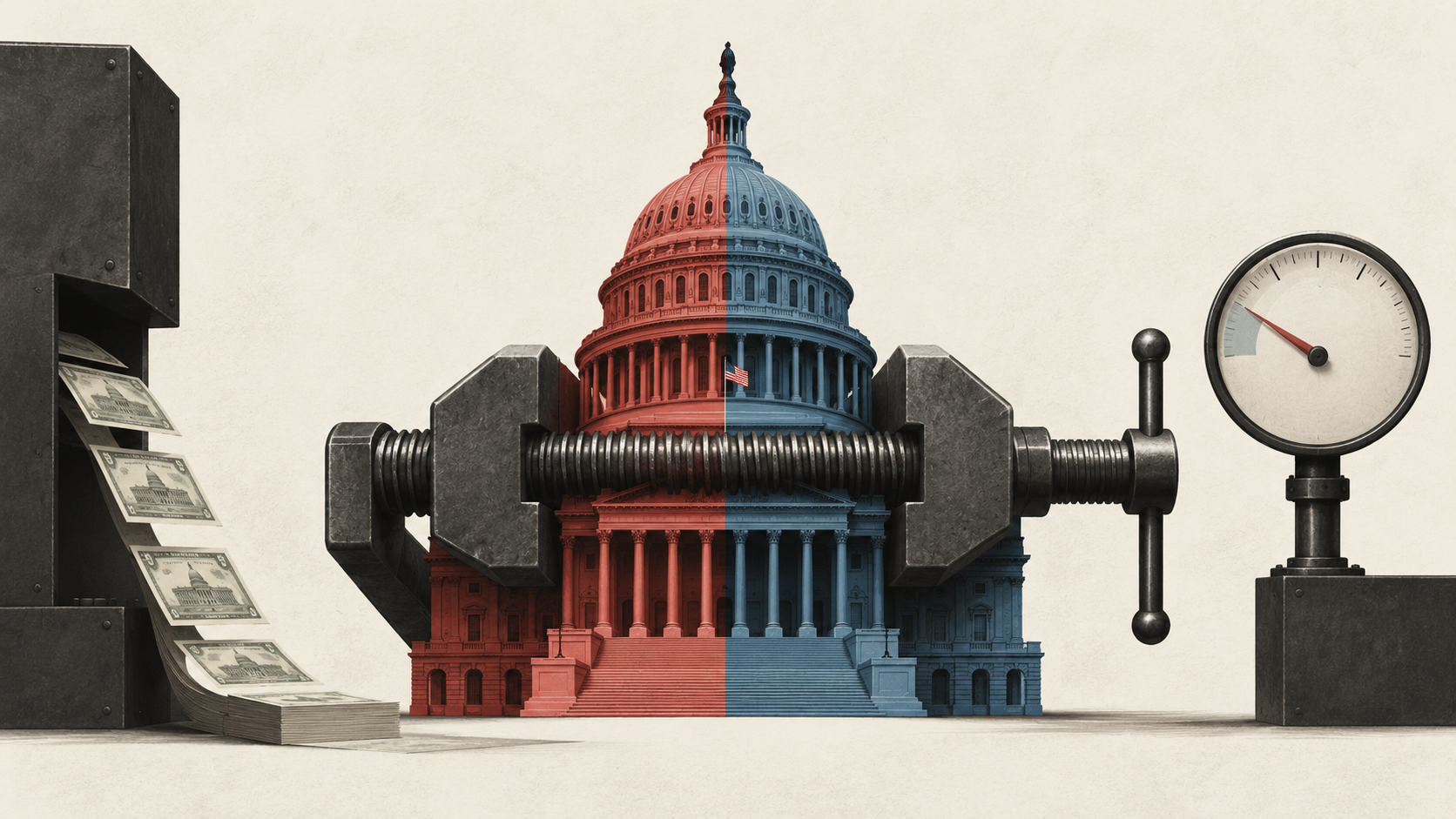
Markets expect a September rate hike, but a Fed hold could prove more expensive. With the 10-year US Treasury yield near 5%, persistent inflation, oil disruptions, and federal deficits threaten to keep borrowing costs climbing.

What You Missed
The Federal Reserve meets September 15–16, and another pause is getting harder for the Fed to defend.
August’s core Consumer Price Index (CPI), excluding food and energy, rose 0.3%, exceeding the 0.2% forecast. Markets now price in roughly two quarter-point hikes by year-end. So much for financing relief.
A Fed hold could push long-term yields higher if investors conclude the central bank lacks the resolve to contain inflation.
Elsewhere, diesel topped $6 a gallon, and attacks forced Saudi Arabia’s East-West pipeline shut. Borrowers hardly needed another expense.
The U.S. Treasury expanded buybacks of longer-dated Treasury bonds. The 10-year US Treasury yield still finished markedly higher at 4.97% by week’s end. Washington would like cheaper debt, preferably without the inconvenience of borrowing less.
Borrower takeaway: Before committing to years of expensive fixed-rate debt, consider floating-rate financing with a rate cap. It could mean lower initial costs and fewer expensive goodbyes when you refinance or sell. At today’s rates, the comfort of fixing deserves a competing quote.
Straight to Smart Summary – September 14th 2026
Rates Rundown: Borrowing Costs Have Other Plans
Your next lender quote may suggest the bond market no longer needs the Fed’s permission to raise borrowing costs.
Ranges for the week ending September 11:
| Rate | Weekly range, low → high | Current theme | Borrower impact |
| 2-year US Treasury | 4.43% → 4.66% | September Fed hike expectations strengthened. | Refresh shorter-term hedge quotes. |
| 5-year US Treasury | 4.62% → 4.78% | Markets priced additional Fed tightening. | Five-year financing deserves another cost comparison. |
| 10-year US Treasury | 4.84% → 4.98% | Oil and heavy borrowing pressured yields higher. | Long-term fixed-rate loans grew more expensive. |
| 30-year US Treasury | 5.29% → 5.37% | Inflation and deficits outweighed buyback relief. | Budget cautiously for long-term financing. |
| 1-month Term SOFR | 3.772% → 3.817% | Term rates anticipated Wednesday’s decision. | Update projected interest expense using your next contractual reset. |
Borrower takeaway: Refresh your fixed-rate quote alongside a floating-rate proposal, including the lender spread and rate-cap premium.
SOFR Forward Curve Watch: Floating Still Deserves a Look
| Rate outlook and financing implications | What it means for borrowers |
| Implied 1-month SOFR around mid-2027 rose from roughly 4.3% on September 4 to 4.6%. | Budget for higher floating-rate interest expense. |
| Implied SOFR eases toward 4.5% around 2029 before climbing again. | The curve offers limited relief from future borrowing costs. |
| Floating-rate financing can still offer lower initial interest expense than 5-, 7-, or 10-year fixed-rate debt. | Compare total borrowing costs through your expected sale or refinance date, including projected SOFR, lender spreads, cap premiums, and exit charges. |
Borrower takeaway: Before paying more to fix your rate for ten years, ask whether you’ll need the loan that long. Your three-year business plan may have opinions.
Fed Hike Odds Watch: A Pause Would Now Be the Surprise
| Market expectation | September 7 | September 14 |
| Probability of a September 16 hike | 61.7% | 91.5% |
| Total tightening priced through December | 34 basis points | 50 basis points |
| Implied overnight rate after December’s meeting | 3.97% | 4.14% |
Borrower takeaway: Use our one-hike outlook as your base case, but test two hikes and higher SOFR beyond that. Your financing should remain affordable if the Fed proves more enthusiastic than we expect.
Themes Driving Interest Rates This Week: The Fed Has Company
| Theme | What to watch | Borrower impact |
| Fed decision, September 16 | A quarter-point hike is heavily priced. Fed Chair Warsh’s comments on further increases could matter more. | Floating-rate resets face upward pressure, while signals about subsequent hikes could move financing and hedge quotes further. An unexpected hold could push longer-term yields higher if investors question the Fed’s inflation resolve. |
| Retail sales, September 16 | Consumer spending data arrive before the Fed decision. Strength would reinforce the case for tighter policy. | Resilient spending could keep financing and hedge costs elevated. |
| Oil disruption and Treasury supply | Saudi pipeline developments, Tuesday’s 20-year US Treasury auction, and Bessent’s congressional testimony. | Prolonged energy disruption or weak auction demand could pressure longer-term yields higher. |
Borrower takeaway: Refresh financing and hedge quotes before Wednesday. A Fed hold could still make fixed-rate borrowing more expensive, an impressive result for a meeting at which nothing changed.
Our Short-Term Outlook: One Hike, Then a Pause
One and done for 2026: Derivative Logic expects a quarter-point hike on September 16, followed by no additional hikes this year. August’s inflation surprise was concentrated in a few categories, while annual core CPI eased to 2.4%.
Long-term borrowing costs face pressures beyond Wednesday’s meeting. Retirees are drawing down savings while government borrowing and AI investment increase demand for capital. That competition could keep long-term yields elevated even after oil prices ease and the Fed eventually pauses. Your refinancing budget should allow for something less miraculous than a return to the rates dream scenario we all enjoyed back in 2021.
| Benchmark | Near-term outlook | Borrower impact |
| 2-year US Treasury | Could ease if expectations for additional hikes recede. | Shorter-term hedge quotes could improve. |
| 5-year US Treasury | Some relief is possible, though persistent inflation limits the downside. | Compare fixed-rate offers with rate-capped floating-rate financing. |
| 10-year US Treasury | A move above 5% remains a risk as oil disruptions and deficits persist. | Long-term fixed-rate financing could become more expensive despite a Fed pause. |
| 1-month Term SOFR | Likely to rise with September’s hike, then stabilize if the Fed pauses. | Budget for a higher reset without assuming repeated increases. |
Actionable Insights: Make Certainty Earn Its Price
- Compare complete financing costs. Check our Interest Rate Dashboard, then compare capped floating-rate debt with 5-, 7-, and 10-year fixed-rate offers, including spreads, fees, and prepayment costs.
- Match protection to your plans. Use our Rate Cap Calculator to estimate premiums for different terms and strikes. Match protection to your ownership period, cash flow, and lender requirements.
- Price partial protection. Compare a rate cap with a partial float-to-fixed interest rate swap. Include potential termination costs if you sell or refinance early.
- Test our forecast. Use our SOFR and Treasury Forward Curves to compare market pricing with our one-hike-then-pause outlook. Test additional hikes, too. Your financing should remain affordable if the Fed develops ambitions beyond our forecast.
Tools Are Cheaper Than Guesswork
Our Interest Rate Dashboard shows current and historical SOFR, US Treasury yields, and float-to-fixed interest rate swap rates, with no login required.
Click Subscribe on the dashboard to receive the rate table by email every day. Borrowing costs demand enough of your attention without requiring a daily search party.
For intraday rates or help comparing financing options, call Derivative Logic at (415) 510-2100.