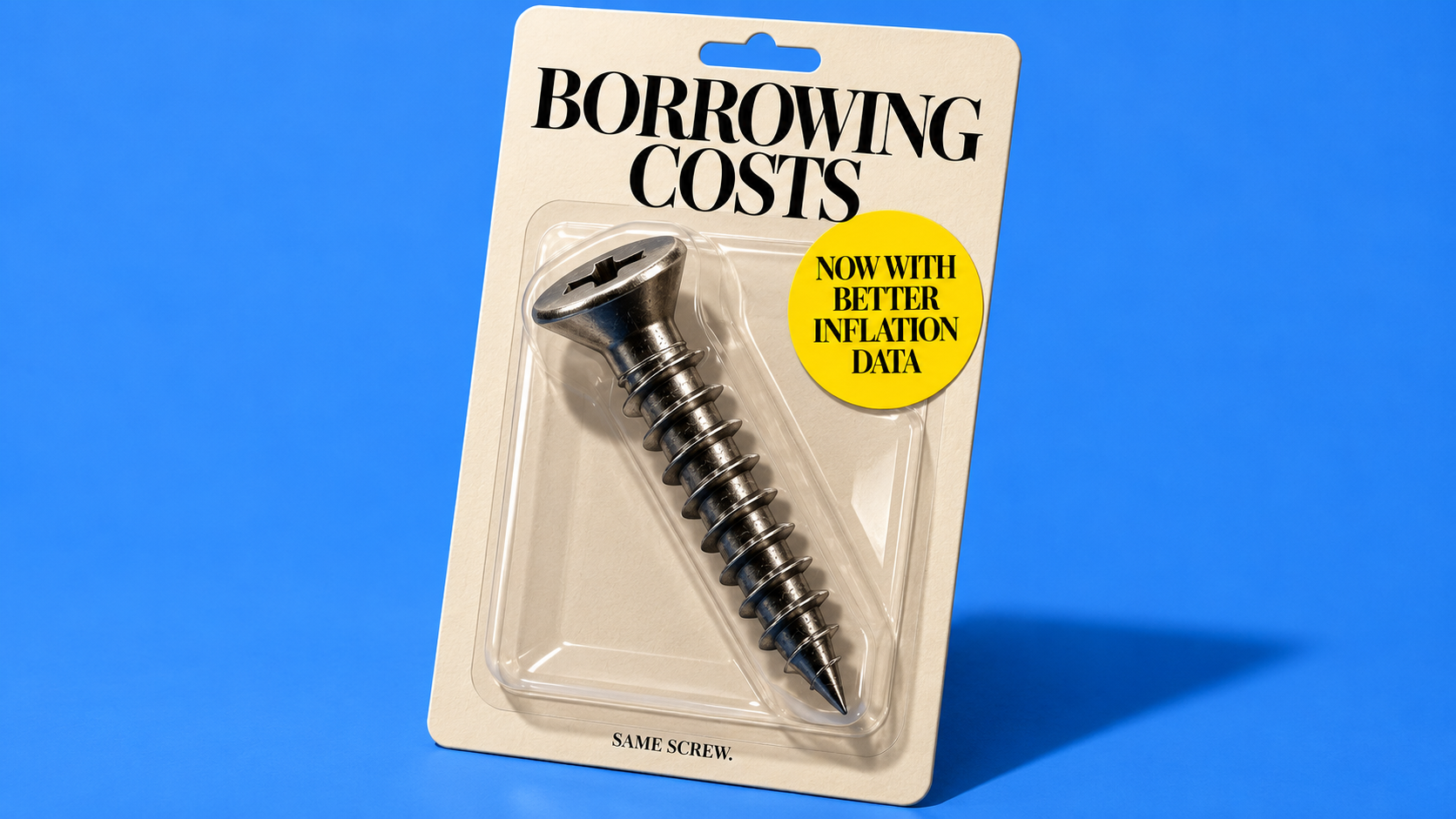
A divided government could curb additional federal borrowing and help lower long-term US Treasury yields. Washington’s inability to accomplish anything might finally offer borrowers something useful.
What You Missed: The Fed’s Idea of a Favor
September’s Fed minutes, released last week, showed most officials expected another rate hike before year-end. Subsequent calls for patience left markets favoring an October pause.
Elsewhere, consumers’ assessment of their current financial conditions hit a record low, while year-ahead inflation expectations rose to 4.7%. Regardless, consumer spending remains resilient. Americans are thoroughly fed up with high prices, though evidently not enough to stop paying them.
With little immediate rate relief on the horizon, borrowers should watch whether the midterms could restrain additional federal borrowing, and by extension, slow or reverse the seemingly incessant rise in interest rates.
Bottom line: Keep your financing plan viable at current rates. Any election-driven relief should improve the numbers, not determine whether the deal works.
Straight to Smart Summary – October 13th 2026
Rates Rundown: Washington’s Debt Problem Is Also Yours
Last week showed why a friendlier Fed outlook is not enough. Reduced October hike expectations helped shorter-term Treasury yields, while fiscal and geopolitical risks kept longer-term yields elevated. Congress gets to announce the spending, while you get to explain the higher borrowing costs to your investors.
For the week ending October 9:
| Benchmark | Weekly range, low → high | Borrower impact |
| 2-year US Treasury | 4.76% → 4.81% | Some relief for shorter-term fixed-rate financing. |
| 5-year US Treasury | 4.99% → 5.06% | Reprice five-year loans and float-to-fixed interest rate swaps. |
| 10-year US Treasury | 5.23% → 5.30% | High debt service continues to constrain refinancing proceeds. |
| 30-year US Treasury | 5.60% → 5.67% | Long-term payment certainty remains an expensive purchase. |
| 1-month Term SOFR | 3.914% → 3.925% | Floating-rate borrowers received no rate relief. |
Borrower takeaway: Compare refreshed fixed-rate quotes with floating-rate financing plus a cap. Ask lenders to update loan proceeds and any required cash paydown alongside the rate.
SOFR Forward Curve Watch: A Discount You Could Easily Miss
A lower, floating-rate alternative – 1-month SOFR – also requires looking beyond today’s interest bill. The October 5 curve (dark blue) sits roughly 1 to 4 basis points below October 13 (light blue) across most maturities. One-month SOFR futures still imply rates near 4.8% in 2028, a shallow dip around 2029–30, then a climb above 5% in the early 2030s.
These are expectations, not guaranteed outcomes. There is nevertheless precious little cheap money in that picture.
Borrower takeaway: Test interest expense using that path plus your lender’s spread, then stress higher SOFR. Check your rate cap’s strike and expiration against your expected borrowing period, including extensions.
Fed Hike Odds Watch: The Fed Might Spoil Christmas Later
That SOFR path reflects a Fed expected to postpone further increases, not abandon them. Markets still price roughly one additional quarter-point hike by December.
| Market expectation | October 5 | October 13 |
| October 28 quarter-point hike odds | 21.6% | 21.6% |
| Implied overnight rate after December’s meeting | 4.14% | 4.14% |
| Implied overnight rate after June 2027’s meeting | 4.63% | 4.61% |
Our view: A pause at the Fed’s next meeting, which concludes October 28, remains our base case, with a December hike still possible. Expect any pause to come with warnings about further increases. The Fed’s post-meeting press conference is unlikely to double as a borrower appreciation event.
Borrower takeaway: Budget for another 0.25% increase in SOFR. Compare that higher rate with your cap’s strike to determine whether cap payments would offset any added interest. On $10 million of unhedged debt, the increase adds roughly $25,000 annually, assuming it fully passes through your loan’s rate formula.
Themes Driving Interest Rates This Week: Gridlock Has Its Uses
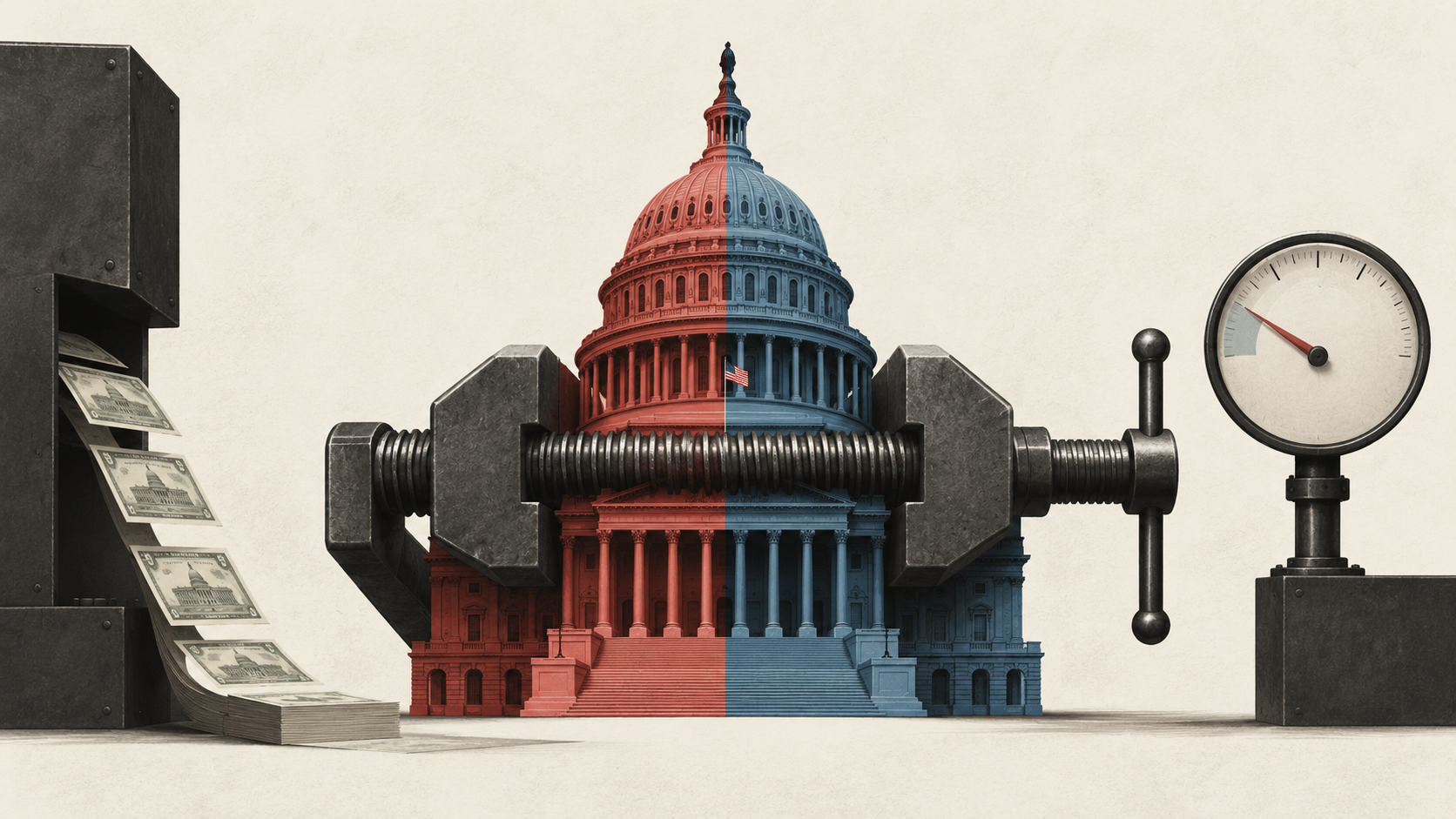
This week’s data will test that pause outlook, while election expectations could reshape longer-term borrowing costs. As of October 8, betting markets assigned a 62% chance to Democrats winning both chambers and 29% to a Democratic House with a Republican Senate. Either outcome would divide power with the White House.
| Theme | What to watch | Borrower impact |
| Midterm expectations | Changes in the likelihood of divided government. | Blocking additional deficit-financed spending or tax cuts could limit extra Treasury borrowing and ease long-term yields. Continued Republican control leaves more room for fiscal expansion. |
| Inflation, October 14 and 15 | Wednesday’s Consumer Price Index (CPI) and Thursday’s Producer Price Index (PPI). | Cooler underlying inflation supports an October Fed pause. Broader price pressures could revive hike expectations and worsen financing quotes. |
| Consumer spending, October 15 | Retail sales beyond the boost from higher gasoline prices. | Weak spending would strengthen the case for a pause. Borrowers should also test what weaker demand means for their revenue. |
Neither party needs to discover fiscal discipline when refusing to cooperate might suffice. Existing deficits would remain, however, and budget fights could limit the benefit.
Borrower takeaway: Set a target fixed rate and minimum refinancing proceeds with your lender now. With divided government already favored, do not assume the election result automatically delivers a better quote.
Our Short-Term Outlook: Expensive Debt Remains Bipartisan
Even if those reports and election expectations cooperate, we expect selective financing relief over the next few weeks, with long-term US Treasury yields still stubbornly high. Why? Congressional gridlock cannot repeal existing government deficits or energy shocks.
| Benchmark | Our outlook | Why | |
| 2-year US Treasury | Stable to slightly lower | An October pause is favored, with December hike risk remaining. | |
| 5-year US Treasury | Modest room to decline | Softer inflation could reduce expectations for further hikes. | |
| 10-year US Treasury | Stay stubbornly high | Election-related relief faces persistent federal borrowing needs. | |
| 30-year US Treasury | Elevated, with upside risk | Debt supply and energy uncertainty limit lasting relief. | |
| 1-month Term SOFR | Near 3.9% initially | An October pause would leave the Fed’s benchmark unchanged. |
Borrower takeaway: Act on fixed-rate quotes that meet your financing targets. Keep floating-rate budgets prepared for a December hike, even if longer-term fixed rates improve.
Actionable Insights: Leave the Indecision to Congress
That split outlook calls for comparing payment certainty with the cost and risk of keeping some exposure floating.
- Compare structures. Price fixed-rate debt against floating plus a rate cap, including lender spreads, loan floors, premiums, and exit costs.
- Fix selectively. Price a partial float-to-fixed interest rate swap to stabilize some payments. Assess potential early termination costs.
- Reprice rate caps. Match strike, amount, and expiration to your exposure and lender requirements.
- Consider a corridor. Pair a purchased rate cap with a sold higher-strike cap to reduce the premium. Confirm lender approval and budget for renewed exposure to SOFR increases above the upper strike.
Tools Are Cheaper Than Guesswork
Start those comparisons with our Interest Rate Dashboard and click Subscribe for daily rates. Check our Forward Curves and Rate Cap Calculator or call (415) 510-2100 to discuss your financing and hedging options.
Your lender is unlikely to accept “Congress let us down” as a refinancing plan.