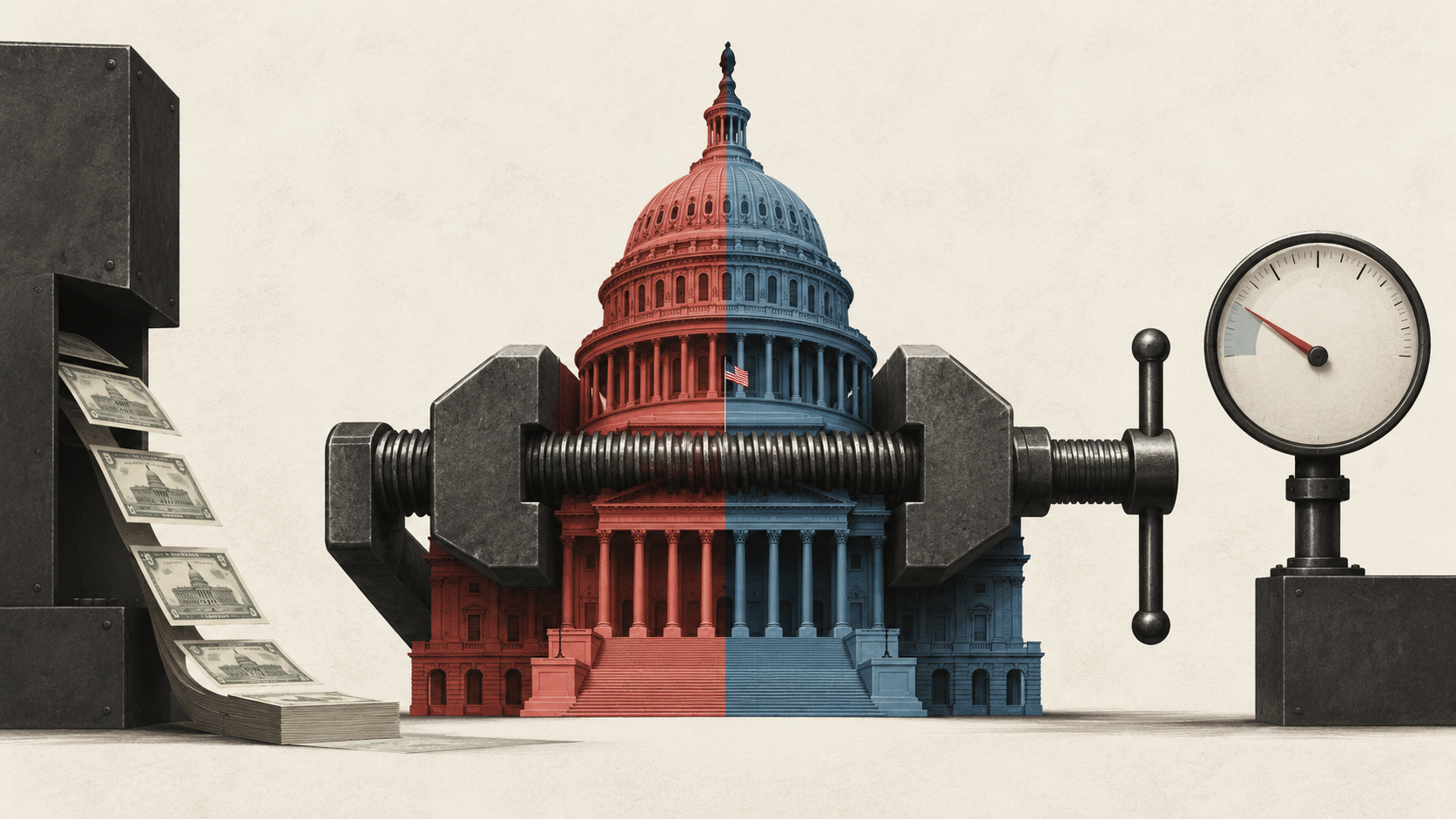
Softer inflation, weaker consumer spending, and fading odds of a September hike pushed short-term yields lower. Deficits, heavy debt issuance and investors demanding higher yields to own long-term debt kept borrowing costs stubbornly high.

What You Missed
Last week’s inflation data gave borrowers some help. Relatively subdued July CPI, weaker retail sales and falling consumer confidence pushed the probability of a September Fed rate hike down to roughly one-third.
Softer inflation and weaker consumer data pulled shorter-term Treasury yields lower, but longer-term yields moved far less as fiscal and supply concerns continued to dominate.
Treasury auctions supplied the uncomfortable explanation. The government sold 10-year debt at its highest auction yield since 2007, followed by a 30-year sale at its highest yield since 2001. Investors showed up. They simply demanded more compensation to lend Washington money for a long time.
Bottom line: Expectations for a Fed hike fell last week. Longer-term borrowing costs barely noticed.
Straight to Smart Summary – August 17th 2026
Rates Rundown: Short-Term Relief, Long-Term Resistance
| Rate | Weekly range | Current theme | Borrower impact |
| 2-year Treasury | 4.14% to 4.24% | Softer inflation, weak retail sales and fading September hike expectations pushed the yield lower. | Helpful for shorter fixed-rate debt and hedges. |
| 5-year Treasury | 4.32% to 4.41% | Lower Fed hike expectations provided some relief. | Borrowers fixing for three to five years saw modest improvement. |
| 10-year Treasury | 4.64% to 4.71% | Softer data helped only marginally as heavy Treasury supply, deficits and investor caution kept yields elevated. | Falling Fed hike odds are providing little relief for longer-term fixed-rate borrowers. |
| 30-year Treasury | 5.21% to 5.26% | Government borrowing, inflation uncertainty and weak demand for long-duration debt kept pressure on yields. | Another warning that long-term capital remains expensive. |
| 1-month Term SOFR | 3.639% to 3.644% | Barely moved even as expectations for a future Fed hike declined. | Floating-rate borrowers saw almost no immediate coupon relief. Lower hike odds matter more for forward rates and hedge pricing. |
The split is the story. Softer economic data and fading expectations of a Fed rate hike helped short-term yields, while deficits, heavy debt issuance, and investor caution kept long-term yields stubbornly high.
Borrower takeaway: Lower Fed hike odds help. They do not guarantee lower long-term borrowing costs.
SOFR Forward Curve Watch: The Hike Keeps Moving Right
The SOFR forward curve moved lower at the short end last week as softer inflation, weak retail sales, and deteriorating consumer sentiment reduced expectations for a near-term Fed hike. The biggest change is concentrated in 2026 and 2027. Farther out, the curve is little changed.
Lower expected SOFR can improve pricing for rate caps and float-to-fixed interest rate swaps, even though the current 1-month Term SOFR has barely moved.
Borrower takeaway: Investors pushed the expected Fed hike further out. They did not remove higher rates from the curve altogether.
Under the Radar: Treasury’s Buyers Have Changed
Barclays estimates private investors now own roughly 73% of the Treasury market, compared with about 50% a decade ago. Foreign central banks and the Fed once absorbed a much larger share. Today, mutual funds, households, banks and other private investors increasingly set the price.
That matters because private investors are more sensitive to yield. Bigger deficits, more Treasury issuance and uncertain inflation can force Washington to pay them more.
Borrower takeaway: Long-term rates increasingly depend on what investors demand to finance Washington, not simply where they think the Fed funds rate is headed.
Themes Driving Interest Rates This Week: The Fed Minutes Get the Microphone
| Theme | What to watch | Borrower impact |
| FOMC minutes | Wednesday: Minutes from the July meeting should show whether support for another rate hike extended beyond the three formal dissenters. The Fed may have reduced forward guidance, but apparently 12 pages of meeting minutes still count as communication. | Broader support for tightening could push 2-year and 5-year Treasury yields, SOFR expectations and hedge costs higher again. |
| Long-term Treasury pressure | Deficits, heavy issuance, and a more price-sensitive investor base continue to keep 10- and 30-year Treasury yields elevated. | Fixed-rate borrowers should not assume softer Fed expectations will translate into materially lower long-term financing costs. Washington still needs someone to buy all that debt. |
| Energy and global rates | Covert shipments of oil from Hormuz are helping to contain oil prices, but the supply system remains fragile. At the same time, rate-hike expectations are rising across several major economies. | Another energy shock or rise in global yields could put renewed upward pressure on US Treasury yields. |
Our Short-Term Outlook: Less Fed Risk, Same Long-Term Problem
| Rate | Near-term outlook | Why |
| 2-year Treasury | 4.10% to 4.30% | Softer inflation, weaker spending and reduced September hike odds should limit upside unless Wednesday’s FOMC minutes reveal broader support for tightening. |
| 5-year Treasury | 4.25% to 4.45% | Lower Fed expectations should help, but persistent inflation risk keeps us from expecting a major decline. |
| 10-year Treasury | 4.55% to 4.80% | Deficits, heavy Treasury issuance and investors demanding higher yields for long-term debt remain formidable obstacles to meaningful relief. |
| 30-year Treasury | 5.10% to 5.35% | The same structural pressures remain even more pronounced farther out the curve. |
| 1-month Term SOFR | 3.63% to 3.65% | Little movement is likely without an actual Fed policy change. |
Our base case is a September Fed hold, followed by one 0.25% hike late in 2026 or early 2027.
For borrowers, the more important call is on the 10-year Treasury. Short-term rates have room to fall. Longer-term Treasury yields have more reasons to stay stubbornly high.
Washington’s borrowing needs have apparently declined the invitation to participate in the Fed-relief story.
Actionable Insights: Hedge the Rate You Have, Not the Fed You Hope For
- Reprice longer-term fixed-rate debt. Lower odds of a Fed rate hike have not produced comparable relief in the 10-year Treasury.
- Reprice float-to-fixed interest rate swaps. The lower SOFR forward curve may have improved swap economics.
- Retest rate-cap strikes. Lower expected SOFR can reduce premiums, so compare several strikes before renewing an existing structure.
- Consider partial hedging. Fixing or capping part of your exposure can preserve some benefit if rates fall while protecting against another move higher.
Borrowers have spent years waiting for the Fed to make hedging decisions easier. The Fed, with admirable consistency, has declined the assignment.
Tools Are Cheaper Than Guesswork
Lower Fed-hike odds do not mean every borrowing rate has moved lower. Use our Interest Rate Dashboard, Forward Curves and Rate Cap Calculator to see what has changed and test your options. All are free. No login required.