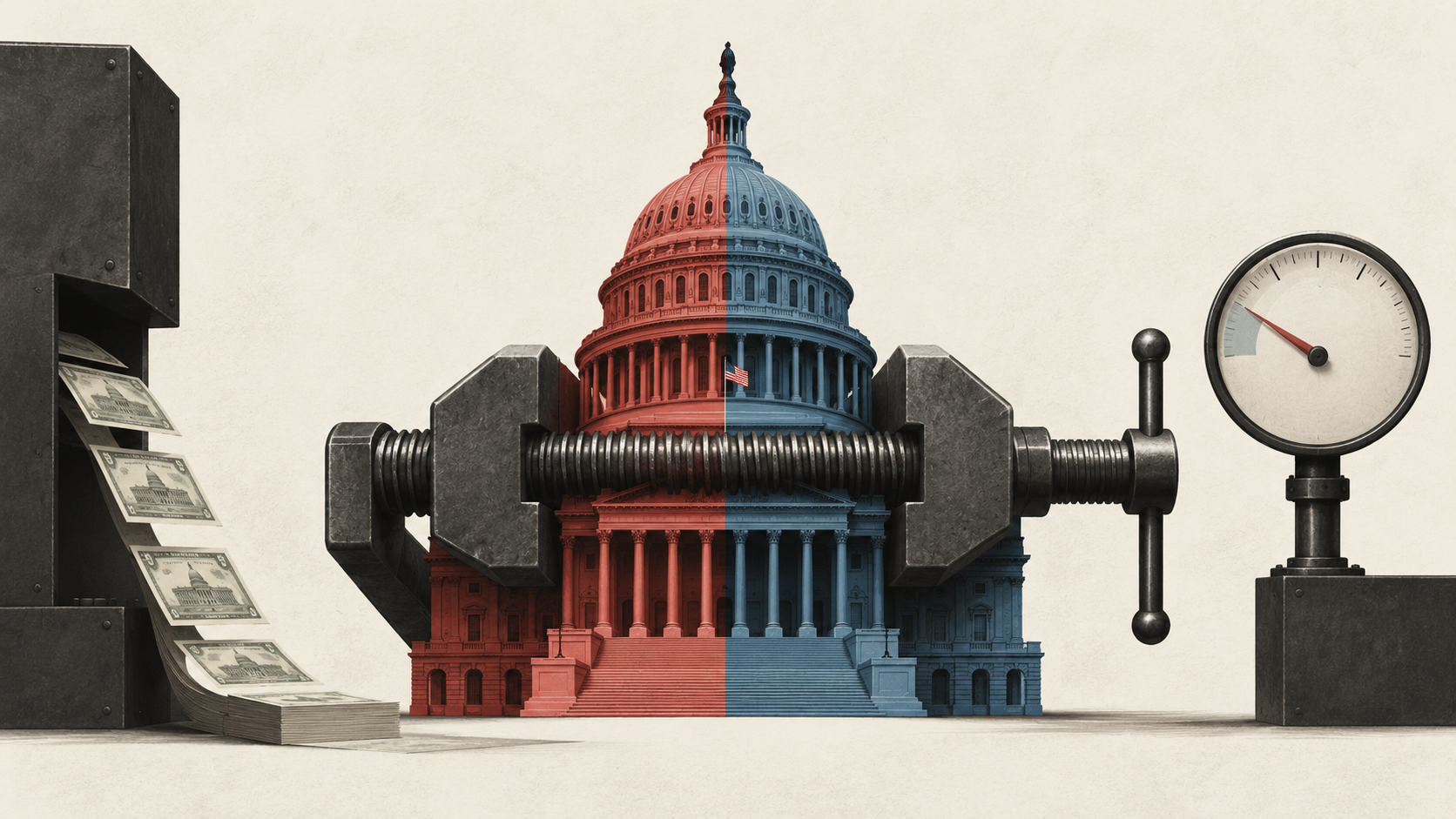
Softer inflation and weaker hiring favor a Fed pause in October, but long-term US Treasury yields could keep your refinancing costs stubbornly high.
What You Missed
The Fed hiked rates last month. Two weeks later, revised data showed inflation had been lower than officials thought, giving borrowers reason to question the timing of the Fed’s latest move.
August core Personal Consumption Expenditures (PCE) inflation, excluding food and energy, registered 3.0% annually versus 3.3% expected. Earlier readings were revised lower. September then delivered 29,000 jobs versus 90,000 expected, with unemployment rising to 4.2%.
Together, those reports weakened the case for another immediate Fed rate hike. Whether they meaningfully improve your financing options depends on how long you need to borrow.
Straight to Smart Summary – October 5th 2026
Rates Rundown: A Small Discount on Expensive Debt
Shorter-term financing benefited as traders reduced hike expectations. Longer-term borrowing received less relief as strong consumer spending and Washington’s borrowing needs continued to frustrate anyone trying to borrow without a printing press.
Unemployment rose largely because more people entered the workforce, making the increase less troubling than one driven by layoffs. Separately, inflation-adjusted consumer spending increased 0.6% in August. Americans remain remarkably capable of complaining about prices while still paying them.
| Benchmark | Weekly range, low → high | Borrower impact |
| 2-year US Treasury | 4.79% → 4.93% | Reduced rate hike expectations helped lower shorter-term financing costs. |
| 5-year US Treasury | 5.01% → 5.09% | Borrowing fixed remained expensive, even when marketed as ‘certainty.’ |
| 10-year US Treasury | 5.24% → 5.28% | High refinancing rates continued to constrain loan proceeds. |
| 30-year US Treasury | 5.57% → 5.63% | Heavy government borrowing kept pressure on long-term financing costs. |
| 1-month Term SOFR | 3.912% → 3.916% | Better headlines delivered essentially the same floating-rate interest bill. |
Borrower takeaway: Seek improved quotes for new financing. Your existing floating-rate interest bill follows SOFR, which has yet to share the market’s relief.
SOFR Forward Curve Watch: Still Expensive Later
Today’s nearly unchanged floating-rate bill also comes with an uncomfortable longer-term outlook. Compared with September 28, the updated curve shows lower near-term rate expectations and slightly higher expectations farther out.
One-month SOFR futures still imply a SOFR near 4.8% in 2028–29, climbing above 5% in the early 2030s. These are changing market expectations, not guaranteed outcomes.
Borrower takeaway: Test interest expense against that path and higher-rate scenarios. Check whether your rate cap’s strike and expiration protect the exposure you actually expect to carry.
Fed Hike Odds Watch: There’s Less of a Rush After All
Behind that curve sits a more patient Fed outlook. Markets now price roughly one additional quarter-point increase by December.
| Market expectation | September 28 | October 5 |
| October 28 quarter-point hike odds | 70.3% | 21.6% |
| Implied overnight rate after December’s meeting | 4.26% | 4.13% |
| Implied overnight rate after June 2027’s meeting | 4.78% | 4.63% |
Our view: We have consistently doubted the need for two more hikes after September before year-end. The latest data support that skepticism. Although we leaned toward an October hike last week, we now favor a pause, with a quarter-point Fed hike in December still possible.
The calendar reinforces that view. October’s decision falls six days before the November 3 midterms. With the economic case weakening, officials may prefer to avoid a politically explosive hike. Congress would presumably welcome this sudden enthusiasm for patience.
Politics offers no guarantee, however. The Fed hiked rates by 75 basis points six days before the 2022 midterms.
Borrower takeaway: An October Fed pause would not itself lower payments on existing SOFR-based floating-rate debt. Existing fixed-rate payments remain unchanged, while new fixed-rate quotes can move with market expectations.
Themes Driving Interest Rates This Week: Old Arguments, New Debt
That pause outlook now faces fresh services data, while Treasury auctions test whether longer-term rates can offer borrowers any relief.
| What to watch | Borrower impact |
| Services activity and prices, October 5 | Strong activity and persistent price pressures could revive hike expectations. Softer readings would support a Fed pause. |
| September Fed minutes, October 7 | Officials’ arguments predate the inflation revisions and jobs report, so check the date before panicking. |
| US Treasury auctions, October 6–8 | Weak demand for 3-, 10-, and 30-year debt could lift yields and fixed-rate financing costs. Washington remains a very needy borrower. |
Borrower takeaway: Refresh financing and hedge quotes around these releases, particularly if your closing is approaching.
Our Short-Term Outlook: Limited Rate Relief
Unless those releases materially change the picture, we expect some relief in shorter-term rates. However, long-term US Treasury yields should stay stubbornly high as government and corporate borrowing compete for funding.
| Benchmark | Outlook | Why |
| 2-year US Treasury | Modest downward pressure | Fewer expected Fed hikes. |
| 5-year US Treasury | Some room to decline | Softer inflation, tempered by resilient spending. |
| 10-year US Treasury | Stay stubbornly high | Heavy government and corporate borrowing. |
| 30-year US Treasury | Elevated, with upside risk | Debt supply and inflation uncertainty. |
| 1-month Term SOFR | Near 3.9% initially | A pause leaves the Fed’s rate unchanged, though expectations can move Term SOFR. |
Borrower takeaway: Use selective improvements to compare financing options without assuming substantially cheaper debt will arrive before your maturity date.
Actionable Insights: Certainty Isn’t Cheap
That outlook favors comparing the protection you need with the price you are being asked to pay.
- Compare total costs. Evaluate fixed-rate quotes against floating-rate financing plus a rate cap, including spreads, loan floors, hedge premiums, and exit costs.
- Reprice required rate caps. Lower near-term expectations may improve premiums, though volatility also matters. Match protection to your loan requirements and cash flow.
- Consider fixing part. A partial float-to-fixed interest rate swap stabilizes some payments while retaining some benefit if SOFR falls. Assess early termination costs.
- Consider a corridor where your lender permits. Buying a rate cap and selling a higher-strike cap can lower the premium by 30% or more versus buying the lower-strike rate cap alone, depending on structure and market conditions. Above the upper strike, net hedge receipts remain positive but stop growing as loan interest rises. Confirm lender acceptance and read our corridors guide.
Tools Are Cheaper Than Guesswork
Visit our Interest Rate Dashboard and click Subscribe for daily rates. Check our Forward Curves and Rate Cap Calculator, or call (415) 510-2100.
Hope is a surprisingly expensive financing strategy for something that costs nothing.