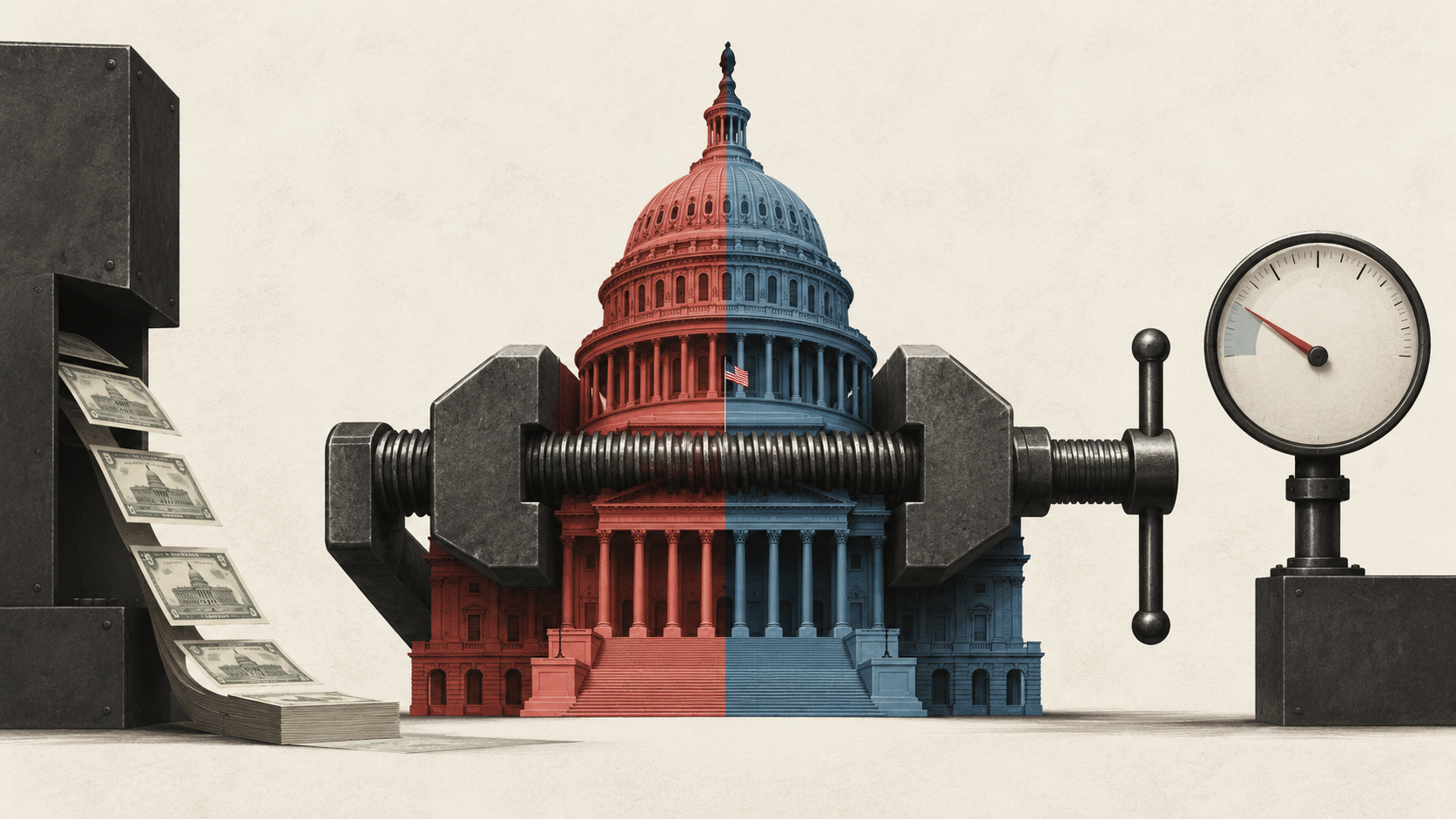
Strong August payrolls and record diesel prices complicate the case for a Fed pause, while September 11 inflation data could make refinancing more expensive before officials even vote.

What You Missed
The labor market declined to cooperate with the case for lower rates. August payrolls rose 162,000, beating every forecast surveyed, while revisions erased July’s reported job losses. Unemployment held at 4.1%, leaving reports of the economy’s demise in need of another draft.
Seasonal quirks flattered the headline, but underlying hiring improved. The report strengthened the case for a September 16th Fed rate hike without settling it.
Meanwhile, diesel reached a record $5.85 per gallon, adding pressure to transportation and construction costs. The 10-year US Treasury yield traded around 4.80% during the week. Treasury Secretary Scott Bessent’s expanded Treasury bond buyback announcement had offered temporary relief, although apparently the bond market expected a solution to inflation and borrowing, too. Good luck with that.
The September 11th release of the Consumer Price Index (CPI) now becomes pivotal. Softer underlying inflation could let the Fed extend its pause and call it patience. A hotter reading would make doing nothing rather harder to dress up as policy.
Borrower takeaway: A Fed pause offers limited comfort when your lender prices off a Treasury yield that keeps climbing.
Straight to Smart Summary – September 8th 2026
Rates Rundown
Borrowing costs remained stubbornly high as Washington offered reassurance and the bond market continued charging full price.
Reported ranges for the week ending September 4:
| Rate | Weekly range | Current theme | Borrower impact |
| 2-year US Treasury | 4.34% → 4.42% | Strong jobs reinforced September hike risk | Shorter fixed-rate financing remains sensitive to CPI |
| 5-year US Treasury | 4.50% → 4.58% | Higher rate expectations supported yields | Three-to-five-year financing offers little relief |
| 10-year US Treasury | 4.75% → 4.81% | Inflation and competing debt supply kept yields elevated | Long-term refinancing remains expensive, regardless of a Fed pause |
| 30-year US Treasury | 5.24% → 5.27% | Buyback optimism met persistent borrowing demand | Treasury intervention has not delivered lasting long-term rate relief |
| 1-month Term SOFR | 3.708% → 3.761% | The next Fed decision drew closer | Floating-rate borrowers face higher reset costs if the Fed hikes |
For the latest rates, visit Derivative Logic’s Interest Rate Dashboard, or subscribe to our daily rate email and retire from your unpaid position refreshing financial websites.
Borrower takeaway: Compare the benchmark plus your lender’s spread, because a generous-looking margin attached to an expensive benchmark is still an expensive loan, however pleasantly presented.
SOFR Forward Curve Watch: Your Next Rate Reset Sends Its Regards
The live curve implies 1-month SOFR rising from roughly 3.76% to 4.30% by mid-to-late 2027, broadly consistent with two to three quarter-point Fed hikes. The debate is how much Fed tightening arrives, and when.
Compared with September 1st, the curve shows slightly less near-term tightening but marginally higher rates through much of 2028–2031. It briefly dips toward 4.25% in 2028 before climbing toward 5% by late 2035, suggesting that any floating-rate relief comes in sample sizes.
Borrower takeaway: A September Fed pause would not automatically lower future borrowing costs, float-to-fixed interest rate swap rates or rate-cap costs. An unchanged Fed rate is not a concession. It is the same expensive money, accompanied by a press conference.
Themes Driving Interest Rates This Week: Inflation Has Declined to Read the Talking Points
| Theme | What to watch | Borrower impact |
| US Treasury buybacks, Wednesday, September 9 | Expanded purchases begin alongside heavy corporate borrowing. | Any yield relief must compete with companies issuing more debt. |
| Producer prices, Thursday, September 10 | Producer Price Index (PPI) consensus: 0.4% monthly, 0.3% excluding food and energy. | A hotter reading could raise hedge costs before CPI data arrives. |
| Consumer prices, Friday, September 11 | CPI consensus: 0.4% monthly, 0.2% excluding food and energy. | Stronger underlying inflation favors a September Fed hike, while softer data supports a pause. |
| Energy and trade, ongoing | Record diesel prices, Iran disruptions, and Canadian tariff retaliation. | Higher operating costs compound the pressure from expensive financing. A lovely combo. |
Borrower takeaway: If your closing is near, decide how much rate risk you can afford before Thursday’s inflation report could make the decision more expensive.
Fed Odds Watch: A Hike Remains the Favorite
| Market-implied measure | August 31 pricing | September 8 pricing | Change |
| Quarter-point hike on September 16 | 65.1% | 59.9% | Down 5.2 percentage points |
| Total tightening through December 2026 | 37.3 basis points | 34.9 basis points | Down 2.4 basis points |
Markets still favor a September hike, though conviction has softened since August 31.
Our Short-Term Outlook: Patience Is Getting Expensive
We lean toward a quarter-point Fed hike on September 16, although sufficiently soft core CPI could justify another pause and change our mind.
| Rate | Near-term outlook | Why |
| 2-year US Treasury | Volatile, upward bias | CPI will reshape September hike expectations |
| 5-year US Treasury | Elevated, upside risk | Further tightening would raise expected borrowing costs |
| 10-year US Treasury | Stubbornly high | Inflation and competing debt supply limit sustained relief |
| 30-year US Treasury | Elevated despite buybacks | Treasury purchases cannot eliminate heavy demand for capital |
| 1-month Term SOFR | Upward pressure approaching September 16 | Term pricing can adjust before the Fed acts |
Borrower takeaway: Budget for elevated rates rather than assuming the Fed’s next press conference will contain a refinancing discount.
Actionable Insights: Your Closing Date Is Not Data-Dependent
| Your situation | This week’s action |
| Closing or refinancing soon | Set an acceptable all-in rate and confirm execution approvals before Thursday’s PPI and Friday’s CPI releases. |
| Floating without protection | Stress-test another 0.25% and 0.50% SOFR increase, including the effect on debt-service coverage. |
| Buying or renewing a rate cap | Compare premiums across lender-approved strikes and maturities, balancing upfront savings against retained exposure. If the rate cap is elective, consider alternative structures like step ups, corridors or collars to bring the cost down. |
| Considering a float-to-fixed interest rate swap | Compare partial and full hedging, matching the term and notional to your expected debt balance and exit plans. |
On $10 million of unhedged floating-rate debt, another 0.50% adds roughly $50,000 in annual interest before amortization.
A rate forecast is useful, but your lender will still prefer payment.
Tools Are Cheaper Than Guesswork
Before this week’s inflation reports, use Derivative Logic’s Forward Curves, Rate Cap Calculator, and Interest Rate Dashboard to assess your exposure and compare financing scenarios. Contact us for transaction-specific pricing.
Your lender has already done the math, and it would be awkward if only one of you had.