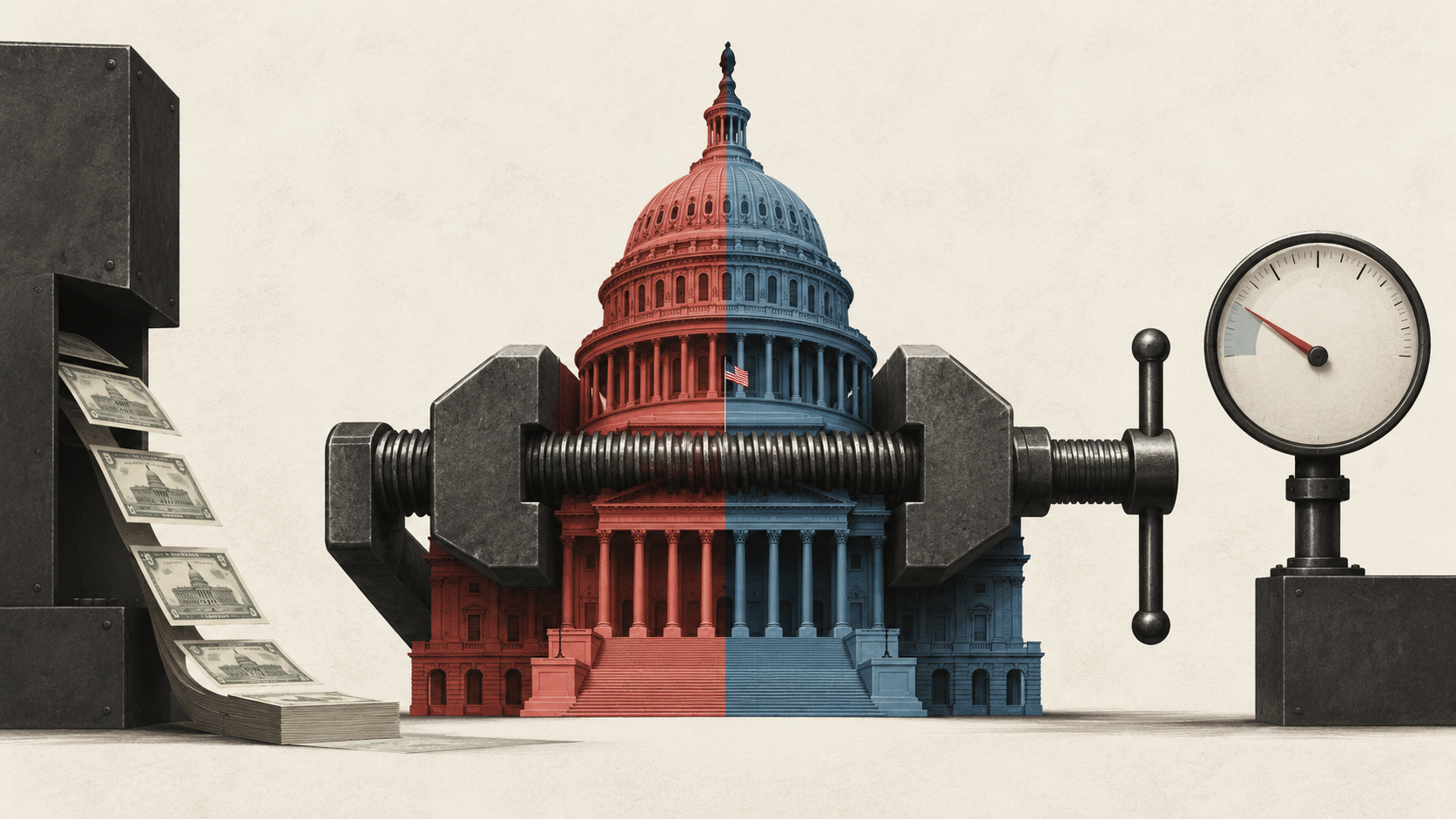
Strong growth, stubborn inflation, and Washington’s borrowing habit sent US Treasury yields higher. Congratulations on the strong economy. Your lender has updated the term sheet.

What You Missed
The US economy delivered more good news, an increasingly antisocial habit if you need a loan.
September business activity expanded at its fastest pace since 2021. August business equipment orders rose 1.6%, beating expectations. The slowdown needed to ease inflation remained absent.
Demand disappointed at Washington’s $70 billion five-year Treasury auction despite its highest yield since 2006. Borrowers with less taxing authority should take note.
Fed Governor Michael Barr backed further hikes. Diesel supply strains threatened higher freight and manufacturing costs. Friday’s decline in crude offered little comfort: long-term Treasury yields climbed anyway.
Borrower takeaway: Refresh loan and hedge quotes before relying on last week’s numbers. Higher US Treasury yields can raise your financing costs even before the Fed hikes again.
Straight to Smart Summary – September 28th 2026
Rates Rundown: Prosperity Has Repriced Your Loan
Ranges for the week ending September 25:
| Benchmark | Weekly range, low → high | Borrower impact |
| 2-year US Treasury | 4.75% → 4.92% | Hike expectations pressured shorter-term financing. |
| 5-year US Treasury | 4.83% → 5.06% | Strong data and weak auction demand lifted fixed-rate costs. |
| 10-year US Treasury | 4.95% → approximately 5.22% | Long-term financing grew more expensive. |
| 30-year US Treasury | 5.28% → 5.53% | Inflation and borrowing sustained pressure. |
| 1-month Term SOFR | 3.897% → 3.901% | Current floating-rate costs barely changed. |
Borrower takeaway: Compare floating-rate financing plus protection with fixed-rate quotes, including lender spreads and hedge costs. Certainty remains available, though you may prefer the uncertainty after seeing the quote.
$54,000 Less for Protection, With a Catch
An interest rate corridor combines buying a cap with selling another at a higher strike. Selling the second cap reduces your upfront cost but limits your protection.
For a $10 million, three-year loan tied to 1-month Term SOFR:
| Hedge | Upfront cost |
| Rate Cap with a 4.5% strike | $175,000 |
| Corridor: buy a 4.5% cap, sell a 6% cap | $121,000 |
| Corridor savings | $54,000 (31%) |
The corridor’s protection works like this:
- If 1-month Term SOFR stays at or below 6%: You pay no more than 4.5%, plus your lender’s credit spread.
- If SOFR rises above 6%: Add the amount above 6% to your 4.5% protected rate, plus your lender’s credit spread.
- If SOFR reaches 7%: That is 1 percentage point above the corridor’s 6% upper limit. Add that 1 percentage point to 4.5%, and you pay 5.5%, plus your lender’s credit spread. If SOFR stays there for a full year, you pay roughly $100,000 more in interest than with the standalone cap on an unchanged $10 million loan.
Most floating-rate lenders, especially non-bank lenders, will not accept a corridor as satisfying the loan’s required interest rate cap. Get explicit lender approval before replacing a required cap.
Borrower takeaway: Keep the savings only if you can afford the risk. Read our Interest Rate Corridors Explained guide.
SOFR Forward Curve Watch: Markets Expect Higher Interest Expense
As of September 25, the three-month SOFR futures curve had shifted higher versus September 21. It implies rates near 4.8% in late 2027, easing toward 4.7% around 2029–2030, then exceeding 5.2% by 2036. The earlier curve offered a dip toward 4.5%.
Borrower takeaway: Test cash flow against higher SOFR. Higher interest expense leaves less cash for investor returns. Your lender gets paid first. Your investment thesis can take a number.
Fed Hike Odds Watch: One Hike May Not be Enough
| Market expectation | September 21 | September 28 |
| October 28 quarter-point hike odds | 55.4% | 68.1% |
| Implied effective federal funds rate after December’s meeting | 4.22% | 4.25% |
| Implied effective federal funds rate after June 2027’s meeting | 4.65% | 4.77% |
The effective federal funds rate is the overnight bank lending rate the Fed steers. Changes generally feed through to SOFR.
Borrower takeaway: We now lean toward another October hike. Brace yourself for higher SOFR.
Themes Driving Interest Rates This Week: Cheap Money Is Off the Menu
| What to watch | Borrower impact |
| Personal Consumption Expenditures (PCE) inflation, September 30 | Persistent inflation could lift rate expectations. Calculation changes may soften reported figures. |
| Manufacturing, October 1, and jobs, October 2 | Strong readings support hikes. Weaker hiring supports a pause. |
| Diesel supply, Iran negotiations, corporate borrowing | Supply relief could ease inflation. Debt issuance sustains competition for capital. |
Borrower takeaway: Refresh financing quotes around these releases. The Fed doesn’t care when your loan closes.
Our Short-Term Outlook: The Case for a One-and-Done Fed Hike Is Wearing Thin
We previously expected September’s Fed hike to be the last this year. Stronger demand and persistent pricing pressure have changed our assessment. We now lean toward another quarter-point hike on October 28.
Treasury Secretary Scott Bessent argues that AI and deregulation can support growth without fueling inflation. That could strengthen the case for a pause if it appears in the data.
The midterms offer no guarantee of restraint. The Fed hiked by 0.75 percentage points six days before the 2022 election. Protecting congressional seats is not its job.
- Changes in how some service prices are measured could lower reported PCE inflation without showing that current price pressures have eased. Don’t expect your suppliers to issue refunds.
- September business surveys still show strong pricing pressure. Weaker hiring, slower underlying inflation, or sustained energy supply relief could restore our case for a pause.
| Benchmark | Near-term outlook | Why |
| 2-year US Treasury | Upward pressure | Further Fed hikes look more likely. |
| 5-year US Treasury | Elevated, with upside risk | Inflation threatens a longer hiking cycle. |
| 10-year US Treasury | Stay stubbornly high | Government and corporate borrowing compete for capital. |
| 30-year US Treasury | Further upside risk | Debt supply and inflation uncertainty pressure yields. |
| 1-month Term SOFR | Steady initially, then higher as hike expectations firm | Term SOFR can anticipate Fed action. |
As we argued in The Era of Low Rates Is Over, near-zero rates were emergency policy for a financial crisis and a pandemic. Their return does not belong in your base-case financing plan. A Fed pause would not guarantee cheap long-term financing.
Actionable Insights: Fixed Rates Deserve Some Competition
Further Fed hikes could eventually weaken growth and bring SOFR lower. Compare today’s fixed-rate quotes with protected floating-rate financing. A cap limits your SOFR cost while preserving savings if SOFR falls. A lender-approved corridor reduces the upfront premium but leaves you exposed above its upper strike. Test a higher SOFR and a delayed refinance.
Tools Are Cheaper Than Guesswork
Visit our Interest Rate Dashboard and click Subscribe for daily rates. Check our Forward Curves and Rate Cap Calculator, or call (415) 510-2100. Your lender has someone looking after its interests. You should, too.