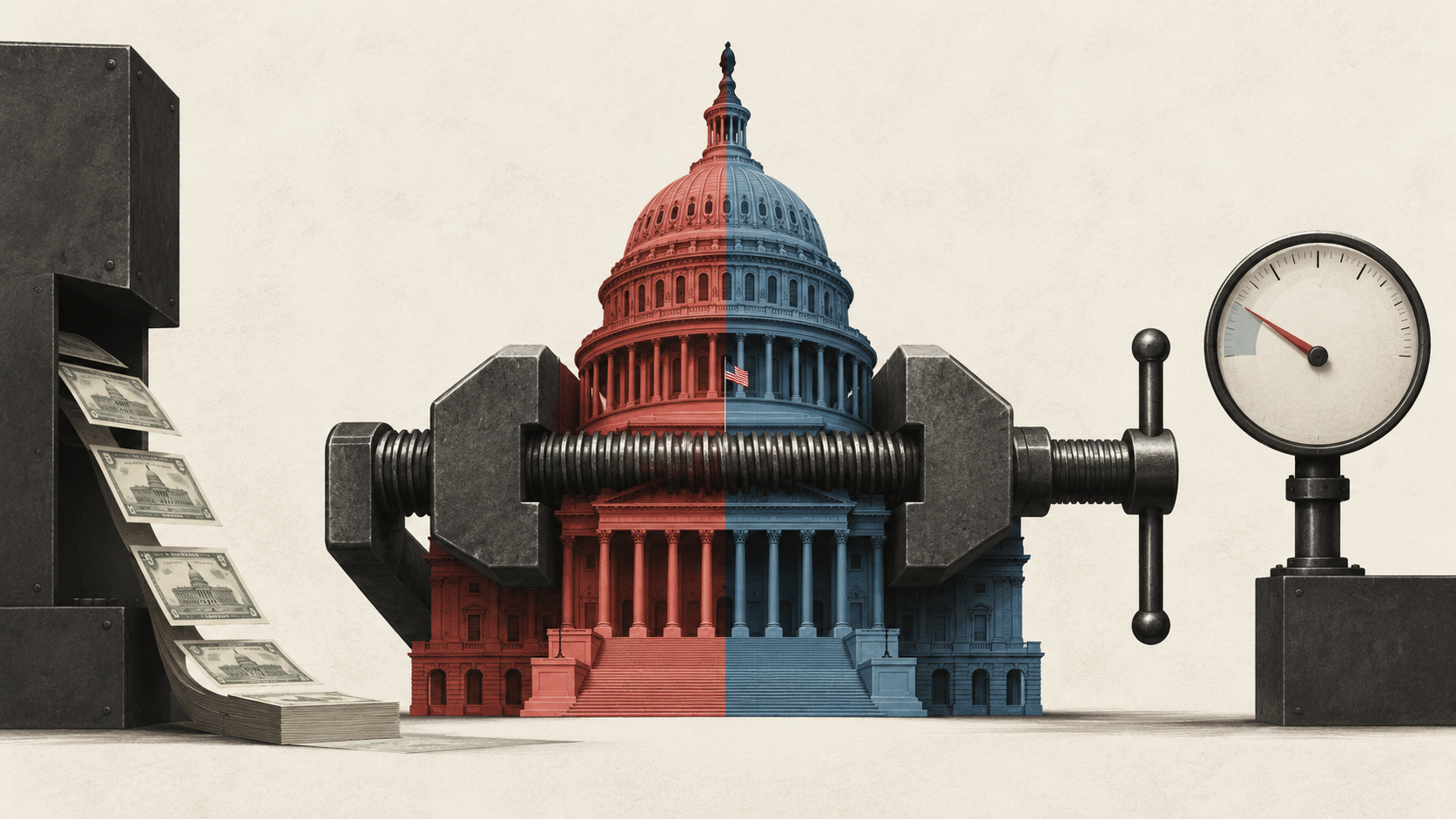
The Fed may eventually cut rates, but persistent inflation, heavy Treasury supply, fiscal deficits, and surging AI borrowing will keep long-term Treasury yields higher.

What You Missed: Treasury Tried to Help. Long-Term Yields Had Other Plans
Treasury Secretary Scott Bessent tried to push long-term yields lower last week by announcing larger buybacks of 10- to 30-year Treasuries. It worked beautifully, for about a day.
The 10-year Treasury yield fell to 4.65% Wednesday, then finished the week at 4.73%. The 30-year followed the same script, briefly dropping before climbing back toward 5.30%.
The message was difficult to miss. US Treasury buybacks can temporarily influence long-term yields. They cannot easily overpower persistent inflation, $40 trillion of federal debt, heavy government borrowing, and a surge in AI-related corporate issuance.
The bond market, displaying its customary respect for government instructions, promptly reversed course.
Bottom line: The forces keeping long-term Treasury yields high remain considerably larger than the tools currently being used to push them down.
Straight to Smart Summary – August 24th 2026
Rates Rundown: Bessent’s Buyback Plan Couldn’t Keep Yields Down.
Treasury yields rose across the curve last week, despite Bessent’s attempt to coax long-term yields lower.
| Rate | Weekly range | Current theme | Borrower impact |
| 2-year Treasury | 4.16% to 4.24% | Fed minutes kept policy uncertainty elevated. | Shorter fixed rates and hedge costs moved higher. |
| 5-year Treasury | 4.34% to 4.42% | Policy uncertainty pushed yields higher. | Three-to-five-year fixing became more expensive. |
| 10-year Treasury | 4.65% to 4.73% | Buyback relief quickly disappeared. | Longer fixed-rate financing remains stubbornly expensive. |
| 30-year Treasury | 5.19% to 5.31% | Fiscal and supply concerns still dominate. | Long-term fixed-rate financing remains particularly expensive. |
| 1-month Term SOFR | 3.647% to 3.667% | No Fed move, little relief for floating-rate borrowers. | Floating-rate borrowing costs barely changed. |
Borrower takeaway: If your financing plan depends on lower rates arriving soon, you do not have a financing plan. You have a forecast, and those have been rather expensive lately.
How Treasury Buybacks Are Supposed to Lower Long-Term Yields
The US Treasury purchases existing longer-dated Treasury securities from investors, reducing the amount of long-term debt the private market must absorb. By becoming an additional buyer, the US Treasury can push long-term yields lower.
Bessent is increasing those purchases because long-term yields have remained stubbornly high despite softer expectations for Fed policy.
The catch: buybacks can change supply and demand at the margin. They cannot eliminate inflation, deficits, or the borrowing required to finance them.
SOFR Forward Curve Watch: A September Hold Does Not Mean Lower SOFR
Fed funds futures – the best source of information for how financial markets see the Fed’s next move – make a Fed-on-hold the base case for the Fed’s next policy meeting on September 16th. Good news, provided your definition of good news is “rates probably will not rise next month.”
The 3-month SOFR forward curve is less comforting. As of August 21, it rises from roughly 3.65% today to around 4.10% in 2027, pauses briefly, then climbs steadily toward 5% over the longer term.
Borrower takeaway: The Fed may hold in September. The SOFR forward curve is still charging borrowers for optimism.
Under the Radar: Warsh’s Fed Overhaul Could Make Rate Risk More Expensive
And the bigger change may not be the next rate decision at all.
Warsh’s five Fed task forces are reviewing how the central bank communicates and conducts monetary policy. The communications group could recommend eliminating the dot plot, reducing forward guidance, and even cutting scheduled Fed meetings from eight per year to six.
For borrowers, less guidance can mean greater Treasury yield volatility and more movement in rate-cap and float-to-fixed interest rate swap pricing, even when the Fed does nothing.
Apparently, eight opportunities per year to confuse everyone were deemed excessive.
Borrower takeaway: A quieter Fed may produce a louder and more expensive rates market.
Themes Driving Interest Rates This Week: Jackson Hole Puts Warsh and Inflation Back in Charge
The calendar gets busier this week, with inflation and Warsh competing for the privilege of moving your borrowing costs.
| Theme | What to watch | Borrower impact |
| Jackson Hole | Friday, August 28: Kevin Warsh delivers his first Jackson Hole speech as Fed Chair. Investors want a clearer commitment to controlling inflation after his July press conference helped unsettle long-term Treasuries. | Reassurance could steady the 10-year and 30-year yields. More ambiguity could push them higher. |
| PCE inflation | Wednesday, August 26: July Personal Consumption Expenditures inflation, the Fed’s preferred inflation gauge, will test whether price pressures are actually cooling. | Softer inflation could ease Treasury yields and hedge costs. A hotter reading could push both higher. |
Borrower takeaway: Your refinance can get more expensive even when the Fed does absolutely nothing.
Our Short-Term Outlook: A September Fed Hold Still Leaves Long-Term Yields Vulnerable
Our base case remains a hold at the Fed’s September 16 meeting. The bigger risk for borrowers remains farther out the Treasury curve.
That is what ‘the era of low rates is over’ means in practice. Fed policy matters, but it no longer controls the entire borrowing-cost equation.
| Rate | Near-term outlook | Why |
| 2-year Treasury | 4.15% to 4.30% | A September hold should limit the upside. |
| 5-year Treasury | 4.30% to 4.50% | Inflation should keep intermediate yields elevated. |
| 10-year Treasury | 4.65% to 4.85% | Deficits, supply, and private borrowing argue against a sustained decline. |
| 30-year Treasury | 5.15% to 5.40% | Fiscal and supply pressure remain strongest at the long end. |
| 1-month Term SOFR | 3.64% to 3.68% | Little movement is likely without a Fed policy change. |
Borrower takeaway: If your deal requires the 10-year Treasury to return to 4% before it works, it’s time to find the eraser and sharpen your pencil.
Actionable Insights: Hedge the Risk You Actually Own
- Compare rate caps with float-to-fixed interest rate swaps. Caps preserve upside if SOFR falls. Swaps provide certainty if it does not.
- Consider partial hedging. Fixing 50% to 75% of floating-rate exposure can reduce budget risk while preserving flexibility.
- Price forward-starting hedges for upcoming refinancings. You can protect future borrowing costs before the loan closes.
- Stress-test the 10-year Treasury at 5.00% or higher. If the deal stops working at that level, you have identified a financing problem before the market has the courtesy to identify it for you.
Borrower takeaway: You do not need to predict rates perfectly. You need to make sure being wrong does not become expensive.
Tools Are Cheaper Than Guesswork
Use our Interest Rate Dashboard and SOFR Forward Curve to pressure-test financing assumptions, then run alternative hedge structures through our Rate Cap Calculator before choosing how much risk to retain.