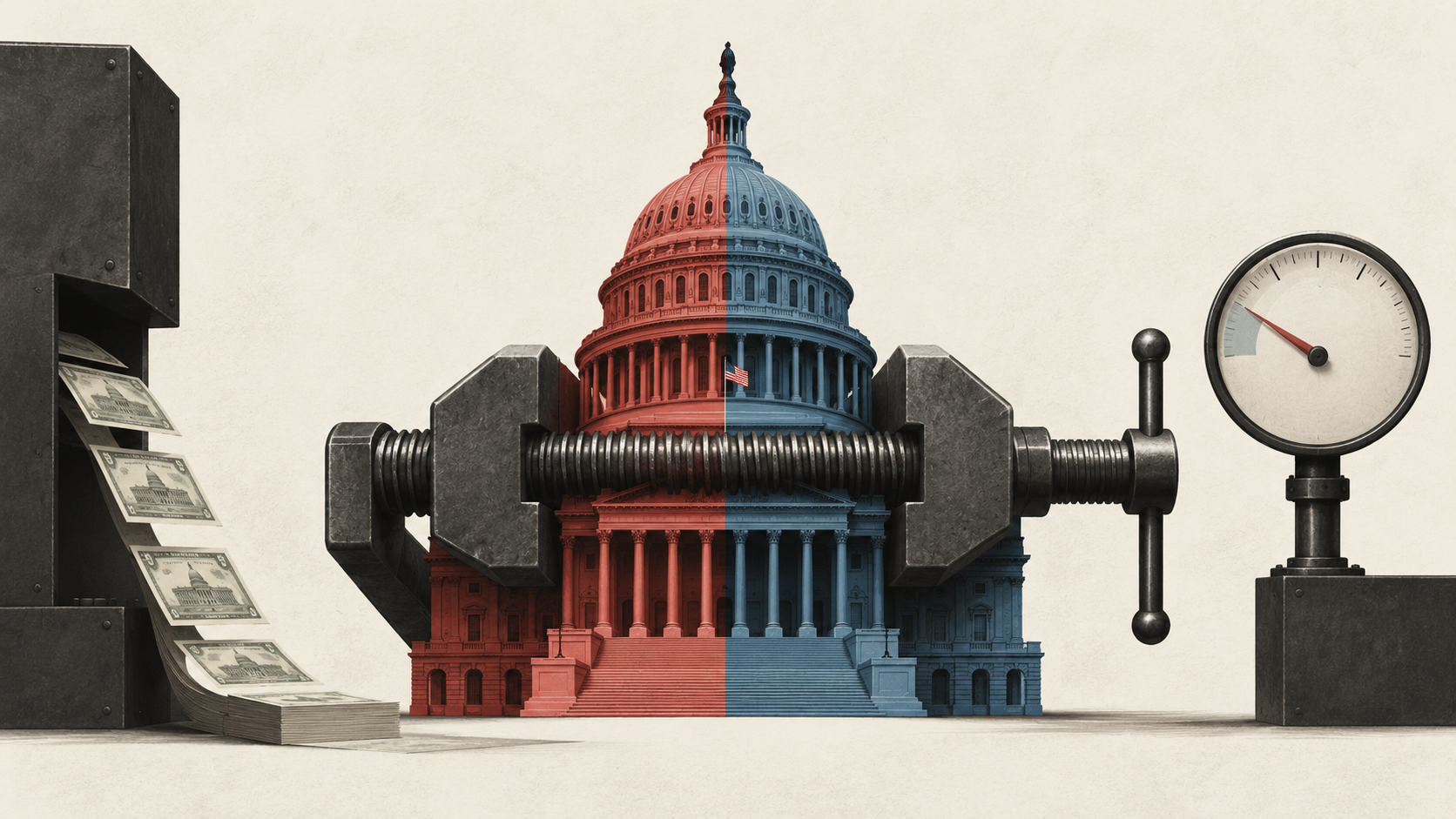
September’s hike may be the last this year, but government and corporate borrowing could keep long-term yields high. Borrowers should compare the cost of certainty with the value of flexibility.

What You Missed
The Federal Reserve unanimously raised rates by 0.25 percentage point on September 16, lifting its target range to 3.75%–4.00%.
Most officials projected at least one more hike this year. By Sunday, Minneapolis Fed President Neel Kashkari was stressing that inflation extended beyond oil into services. The argument for a quick end to tightening has become less comfortable.
US Treasury yields rose Friday even as oil declined. Expectations for further Fed hikes, heavy government borrowing, and corporate debt issuance kept borrowing costs under pressure. Cheaper oil apparently does not include complimentary financing relief.
Yet the economy offered conflicting evidence. August manufacturing output fell 0.3%, while import prices rose 7% from a year earlier, driven heavily by AI hardware and industrial inputs. One weak factory report hardly settles the rate debate, but it complicates the case for repeated hikes.
Borrower takeaway: Further hikes remain possible, while long-term yields look set to stay stubbornly high. The Fed is tackling rising costs by increasing yours, a distinction best appreciated by someone without a loan.
Straight to Smart Summary – September 21th 2026
Rates Rundown: Higher Costs Across the Menu
Ranges for the week ending September 18:
| Rate | Weekly range, low → high | What drove it | Borrower impact |
| 2-year US Treasury | 4.66% → 4.74% | Expectations for further Fed hikes. | Upward pressure on shorter-term financing and hedge pricing. |
| 5-year US Treasury | 4.78% → 4.88% | Markets priced a longer Fed hiking cycle. | Five-year fixed-rate financing remains expensive. |
| 10-year US Treasury | 4.93% → 5.02% | Inflation and competition for capital. | Long-term loan quotes face continued pressure. |
| 30-year US Treasury | 5.28% → 5.37% | Persistent inflation and heavy debt issuance. | Little relief for long-term financing budgets. |
| 1-month Term SOFR | 3.862% → 3.899% | Term rates reflected the Fed hike. | Interest expense adjusts at your contractual reset. |
Borrower takeaway: Further Fed hikes threaten shorter-term borrowing costs, while inflation and heavy borrowing keep longer-term yields elevated. Borrowers retain a wide choice of loan terms, all being priced with admirable indifference to their budgets.
SOFR Forward Curve Watch: Your Budget May Need Another Revision
The 1-month SOFR futures curve shifted higher through the next few years compared with September 14.
| Market pricing | What it means for borrowers |
| Implied SOFR around mid-2027 rose to roughly 4.7%, from about 4.6%. | Budget for higher floating-rate interest expense before assuming relief. |
| Rates ease toward 4.5% around 2029–2030. | The curve prices only modest relief after the initial increase. |
| Rates climb again afterward, approaching 5% around 2035–2036. | Long-term financing plans should allow for persistently elevated rates. |
Borrower takeaway: Markets expect higher SOFR into 2027, followed by limited relief. Your original financing budget remains a useful document, particularly as a record of your optimism.
Fed Hike Odds Watch: Apparently, Once May Not Be Enough
September’s quarter-point hike is now delivered. As of Monday, September 21, markets priced roughly another 0.32 percentage point of tightening by December.
| Market expectation | September 14 | September 21 |
| Implied odds of an October 28 quarter-point hike | 46.5% | 50.9% |
| Implied overnight rate after December’s meeting | 4.16% | 4.20% |
| Implied overnight rate after June 2027’s meeting | 4.53% | 4.63% |
Borrower takeaway: September settled the question of whether the Fed would raise rates. Markets have moved on to how often, a discussion borrowers were hoping would be shorter.
Themes Driving Interest Rates This Week: A Quiet Calendar, in Theory
| What to watch | Why it matters for borrowers |
| Fed officials speak throughout the week. | Support for further hikes could push projected SOFR and hedge quotes higher. |
| Trump-Xi summit, September 24. | Progress on trade and Iran could ease inflation concerns. Disappointment could sustain pressure on energy prices and yields. |
| US Treasury note auctions, September 22–24. | Buyers must absorb $183 billion of 2-, 5-, and 7-year notes. Weak demand could pressure financing rates higher. |
| Jobless claims and new home sales, September 24. Durable goods orders, September 25. | Resilient employment and investment would support further tightening. Weakness could temper those expectations. |
Borrower takeaway: Further hikes, trade tensions, and heavy debt issuance could keep financing costs elevated. Borrowers hoping for a quiet week should note that the Fed, Washington, and Beijing have not agreed to one.
Our Short-Term Outlook: One Hike, Then a Pause
Our base case remains no further hikes this year. Higher borrowing costs are already weighing on rate-sensitive activity, and we expect that restraint to become more visible. Broader inflation pressure would challenge that view.
| Benchmark | Near-term outlook | Borrower impact |
| 2- and 5-year US Treasury yields | Could ease if expectations for further hikes recede. | Shorter-term financing and hedge quotes could improve. |
| 10-year US Treasury yield | Likely to stay stubbornly high. Another move above 5% remains possible. | A Fed pause would not guarantee cheaper long-term financing. |
| 1-month Term SOFR | Could stabilize after adjusting to September’s hike if the Fed pauses. | Budget for higher resets before assuming relief. |
Borrower takeaway: The Fed may stop raising rates. Government and corporate borrowers have shown considerably less interest in stopping borrowing, which could keep your financing expensive long after the Fed finishes.
Actionable Insights: Give Floating-Rate Financing a Look
Rates getting you down? Before automatically signing another fixed-rate loan, compare floating-rate financing with a rate cap. Ten years is a substantial commitment to a rate you already dislike.
For some borrowers, the alternative may offer:
- Lower initial financing costs. Depending on lender spreads and cap premiums, capped floating-rate debt may cost less initially than longer-term fixed-rate financing.
- More flexibility to exit. Some floating-rate loans carry fewer prepayment restrictions. That matters if your sale or refinance comes well before the fixed-rate loan matures.
- Protection with potential savings. A rate cap limits exposure above your chosen SOFR strike during the cap’s term while preserving the benefit of lower SOFR if rates decline.
- Compare terms, strikes, and loan amounts in our Rate Cap Cost Matrix, then estimate your premium with our Rate Cap Calculator.
Compare total costs over your expected ownership period and test additional hikes. Floating without protection is a different proposition from floating with a cap. Optimism is considerably cheaper than either, but lenders rarely accept it as payment.
Tools Are Cheaper Than Guesswork
Track SOFR, US Treasury yields, and float-to-fixed interest rate swap rates on our Interest Rate Dashboard. Click Subscribe to receive the rate table by email each day.
For intraday rates or help comparing financing options, call Derivative Logic at (415) 510-2100. Your lender has run the numbers. It would be useful if someone ran them for you.